The Man Behind the Wheel
- Jan 8
- 4 min read
Behind the wheel of a truck out there is a man who volunteers in orange to help strangers on some of the worst days in their lives. Meet Matt. One of the many volunteers who are the backbone of our communities.
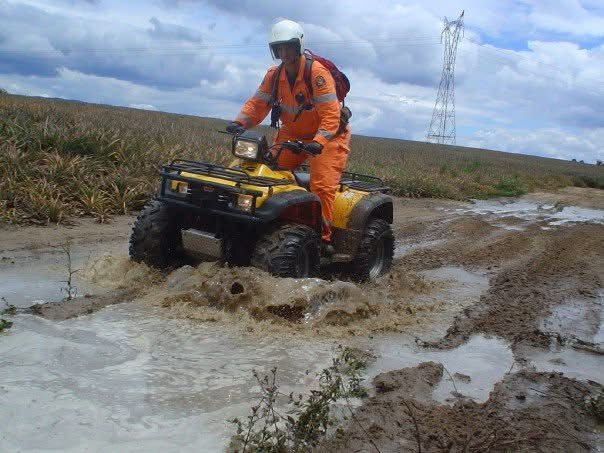
Matt's Story:
I joined the SES when I was 22 years old. I threw myself into training early and the following years took on a wide range of operational and leadership roles in different parts of Queensland: Caloundra, Mt Isa and Brisbane. Volunteering has been a big part of my life, shaping me, challenging me and connecting me to communities I care about.
The toughest jobs are the ones involving deceased persons. They’re not frequent, but there are five I can recall instantly.
Of those, the one that haunts me most is turning up to help at a swimming hole near Lake Manchester. There was a sign up there saying no swimming because people had died there, but people always think “it won’t happen to me” and just ignore the sign and swim anyway.
We quickly discovered that a man had died. It was reported that he dove into the water, hit his head, surfaced briefly and then sank again. By the time we got there he was 3-4m under the water. QPS asked the SES volunteers to help recover his body. We didn’t hesitate and there wasn’t really time to think about how that might feel later. It was a confronting job and opened my eyes to how quickly an ordinary day can turn into something devastating.
I’ve been on other searches when the missing person was found deceased, but my role was less hands on and more about helping to secure the scene. Strangely, even without direct contact or a close view, your mind fills the gaps. There’s always an impact. Some feelings can be hard to shake long after you’ve gone home.
I’ve been struggling with PTSD for a long time but didn’t know it until I reached out and got some help about 15 years ago. My dad was a hard man, so I was brought up in a household where you were expected to “just get on with it”. For years, it felt easier to be outspoken or use humour and my smart-ass attitude as armour, rather than admit I wasn’t ok.

Over time I’ve learned to understand myself better and know my limit. I recognise when I’m solid and strong enough to lead others, and when I'm not and need to step back and take emotional shelter.
Debriefing back in the day used to feel very different. After a job, the team would stay back, share a cold drink, and unwind together before heading home. During the 2011 floods, XXXX dropped off a couple of slabs of beer at the depot, and each afternoon when crews returned from the field, we’d sit down and talk through the day. It was a simple but powerful way to decompress, share what was on your mind, and just be with each other.
These days, debriefs are more formal and much quicker. People stand quietly, say little, and then head home. You might not see the same faces again for weeks. A lot goes unsaid.
The organisation offers peer support and counselling, which is important, but timing is everything. When something tragic happens, you don’t always feel ready to talk straight away, especially with someone who wasn’t involved. And as time passes, it can become even harder to admit that a job has affected you, or to take that step and reach out for help.
There are certain jobs I avoid for my own wellbeing. I no longer search for missing kids on rural properties. Why? There is often family on scene, heightened emotions and the outcomes can be devastating. Once I arrived at a job, expecting to search all day. My daughter Abby was about four at the time, and when the briefing revealed the missing child was also a four-year-old girl, I knew instantly that I couldn’t do it. I quietly left and went home. I needed to take care of myself first.
I would never question or fault anyone for deciding not to take part in a search. We all have our limits and knowing them is a big part of staying well. If you’re not in the right headspace or the situation feels too close to home, then it can really mess with you.
But there are so many good moments too. Plenty of great jobs and happy outcomes. Deployments are always memorable, working alongside incredible volunteers in tough conditions, whether it’s floods, cyclones or storms. I’ve been on flood boats doing rescues, supply drops and evacuating people or animals. Other times I’ve been with my team in a vehicle, dealing with fallen trees and damaged houses, or in a helicopter getting a bird’s eye view of disaster zones. Those experiences stay with you in the best way.

And then there are the community events. One of my favourites was the 4KQ Christmas party at the Brisbane Convention centre. SES volunteers, Defence personnel and other agencies would come together to support underprivileged kids and their families. People donated toys and volunteers spent the day helping create a bit of magic. It was always a feel-good job.
At the end of the day, I love being part of the SES. I love helping my community. It’s part of who I am.
Who is this extraordinary volunteer?
Meet Matt Paine.

Matt is a professional truck driver and a proud father to his teenage daughter, Abby.
He enjoys painting models and has a soft spot for animals. You might pass him on the highway and see only the truck and the man behind the wheel, but there’s far more to him than that.
You’d probably never guess that this larger than life truck driver is the same man who finishes a shift, heads home, puts on an orange uniform, and steps back out into the world to help people on their worst days.
He brings skills, compassion, and decades of experience to every job.
If you're struggling or need help:


Comments