Boxed In: Tara Burns Again
- Aug 24, 2025
- 5 min read
Updated: Dec 20, 2025
Tara was burning again....destroying everything in it's path... so many homes and dreams lost... environmental destruction and endless animals and their habitats lost. Some things you just can't unsee or unfeel. I have hidden scars that will last a lifetime.
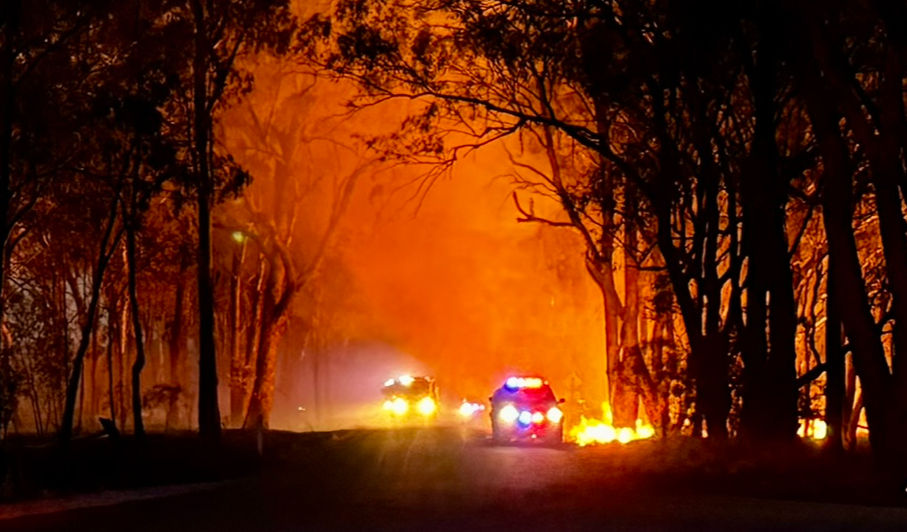
I’d been deployed to dozens of major fires over the years, but this one felt different from the moment my boots hit the ground. Our strike team was hastily assembled: four trucks, twelve firefighters, a mix of seasoned veterans and rookies who had never seen a fireground up close. There was no time for cohesion, no time for introductions. Just a briefing, a signature, and the long drive west.
We arrived expecting a travel day. Instead, we were thrown straight into chaos.
Incident control was a blur of movement and tension. “Can you gear up and head straight out?” came the request. I didn't hesitate. Our crews may have been expecting a travel day but every fire fighter was alert and ready to go. We'd been listening to the radio calls for hours as we travelled so had a feel for how bad things were.
There were no facilities, just a single toilet and a long dirt road but the fire didn’t care about modesty and we didn't have the time or luxury to go somewhere else to change.
I watched my crew strip down in the open, men and women alike, swapping travel blues for firefighting gear. It was uncomfortable, undignified, and necessary. I felt the weight of leadership pressing down—protecting dignity while protecting lives. But the flames were already moving.
That first chaotic moment became the rhythm of the deployment. Every time we settled into a task, something broke loose—a flare-up, an explosion, a call for help. I’d trained for unpredictability, but this was relentless.
When we had a moment to rest there were rumors and talk of arson. “They reckon the fire was started by an arsonist. The same one that started fires in the area earlier in the year” said one of the fire fighters. “It’s not natural,” someone muttered. “Too many ignition points in places that don’t make sense.” Time would tell but regardless of why, our job was to contain not judge.
The management structure rotated constantly. Crews came and went, fatigue limits enforced, skills and experience fluctuating with every shift change. I found myself surrounded by good intentions, strong opinions, and clashing egos—all trying to operate in life-threatening conditions with limited resources and no margin for error.
Then came the task that would haunt me.
We were assigned an 8-kilometre strategic burn—critical to boxing the fire in and preventing devastation beyond Tara.
Step 1 was to make sure everyone was evacuated from the area, and check which houses could be defended when the fire went through. The sector commander gave me a start and end point, no map, no list of properties. I was asked to send two experienced crews to assess every home along the line and decide which were defendable.
It was a difficult task to be responsible for. These weren’t crews I’d worked with before. I didn’t know their judgment, their instincts. But the clock was ticking, and catastrophic conditions were forecast for the next day so I made the call.
The 2 crews went from property to property, checking each one for people, animals and the ability to protect any structures. Some properties were fire-ready—cleared vegetation, clean gutters, solid access. Others were tinderboxes—overgrown, cluttered, impossible to reach. I knew what those assessments meant. If a property was deemed undefendable, no truck would be sent when the fire came. It was a decision that could mean the loss of someone’s home, their memories, their life’s work.
I hoped the crews found every structure. I hoped they made the right calls. But I couldn’t be sure. The responsibility sat heavily on my shoulders, it was persistent and impossible to ignore.
Once preparations were complete, the pressure intensified. The burn had to be finished by 4pm. Catastrophic conditions were expected the next day, and this line was the last defence. But just as we were ready to start, new personnel rotated into the command structure, causing delays. I watched the clock tick down, frustration mounting. The urgency was palpable, but the fire waited for no one.
Eventually, the call came. The race against time began.
Crews worked tirelessly, burning kilometre after kilometre. Somewhere along the way, I was unexpectedly allocated two or three additional appliances—and then, an entire strike team: six trucks, their crews, and another team leader. I was unclear why. These resources should have been managed by the sector commander. I didn't challenge the requests but rather just absorbed the extra responsibility.
Later, I would reflect on the decision and realise I should have said no and kept my span of control to a more manageable size. But in the moment, there was no time to think. Only time to act.
As the burn neared completion, an urban appliance arrived late in the day. The crew had been sent from afar, concerned the burn wouldn’t finish before the weather turned. With most of the line already burnt, they didn’t stay long. But before leaving, the officer dropped a bombshell.
“You need to watch out—they’re gunning for you,” he said casually. “There’s a property no one checked.”
I froze. The address he mentioned wasn’t in my assigned area. Confusion set in. Had my crews missed something? Had the sector commander miscommunicated the boundaries? Was blame being misdirected? Or was it my fault?
There was no way to verify. The sector commander was at the far end of the burn, unreachable due to smoke, distance, and poor comms. I was left hanging, uncertain and deeply unsettled.
As night fell, the other strike team was stood down due to fatigue. Urban crews rotated in.
Then came another urgent call: a property at the far end of the burn was under threat. I dispatched two experienced crews under lights and sirens, armed with limited information and a heavy sense of responsibility.
Hours passed. The remaining crews waited, exhausted, hungry and impatient to get back to camp and rest. There was nothing I could do but assure them that the other crews would be back soon....
Fragments of information trickled in. The house was lost. It had all gone to shit. My crews were stuck, unable to return, trapped by a labyrinth of hoses and trucks fighting the blaze.
It was the same property that had supposedly been missed. Tensions rose. The waiting crews grew impatient. Blame flew in every direction.
Then, an inspector from Brisbane arrived, stern, demanding, flanked by an entourage. He berated me for exceeding fatigue limits.
“It’s your responsibility to get your team off the fireground!”
I took it on the chin.
Eventually, the crews returned—drained, adrenaline still pumping. They explained they’d been trapped by hoses, unable to move, and had stayed to help fight the fire. I believed them. I had to.
I focused on getting everyone back to camp, hours later than expected. The fire was boxed in. But the cost—emotional, physical, moral—was etched into every face.
Leadership in disaster isn’t just about tactics. It’s about bearing the weight of uncertainty, absorbing blame, and making impossible decisions in impossible conditions.


Comments